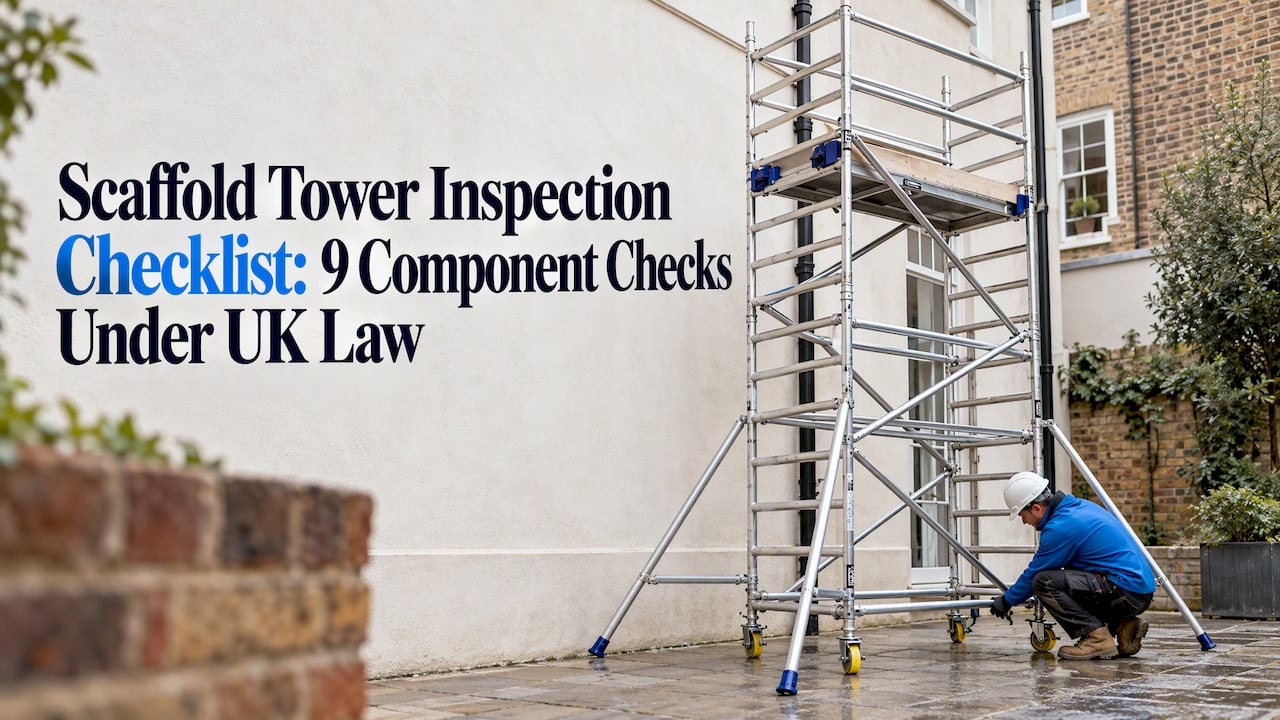
Under UK law, inspect a scaffold tower after assembly and before first use, then at regular intervals as required wherever a fall of 2 metres or more is possible, as set out by the Work at Height Regulations. A competent person must carry out each inspection and record it in writing. You also need to inspect immediately after adverse weather, impact or alteration, regardless of when the next scheduled check falls due.
TL;DR:
- A competent person must inspect towers with a 2 metre fall risk after assembly, at least every seven days, and immediately after adverse weather, impact, or alteration.
- Inspect castors and brakes, legs, frames, decks, guardrails, braces, stabilisers, access points, and labels; missing clips or braces can undermine stability.
- Tags do not replace written reports; record the inspector, location, date, defects, and corrective action, and send the report within 24 hours.
- Before climbing each day and after every move, check level ground, locked brakes, stabilisers, wind, and overhead hazards, then repeat checks after repositioning.
- If you find a defect, stop use, attach a do not use tag, record it, and arrange competent repair or replacement before anyone climbs.
Table of Contents
- Component checklist for a thorough tower inspection
- When the law requires an inspection and what employers must record
- Recording and storing your tower inspection paperwork
- Daily pre-use checks before anyone climbs the tower
- Common defects and what to do when you find one
- Getting towers that are easier to inspect from day one
- What actually makes inspections stick on a busy site
- Scaffold Tower Rental: towers that arrive ready to inspect
- FAQ
- Sources
Component checklist for a thorough tower inspection
A proper inspection works through the tower piece by piece rather than glancing at the whole structure. Site teams can copy the following checks directly into their own forms or use them as a verbal walk-round before signing off a tower as fit for use.
- Castors and wheels: check for cracks or damage, confirm free rotation and test that the brakes lock firmly under load.
- Adjustable legs: look for bent or dented sections, undamaged threads and a locking device that engages properly.
- Frames and spigots: frames should sit straight and square, with spigots parallel and all locking clips or bolts fully engaged.
- Platforms and decks: check for splits, warping or sagging, and confirm deck-to-frame fixings and toe board clips are secure.
- Guardrails, midrails and toeboards: these must be present, fitted tightly and set at the correct heights on every open edge.
- Braces, outriggers and stabilisers: confirm correct sizing for the tower height, tight clamps and solid footpad contact with the ground.
- Access and climbing: use internal ladder access only, with rungs intact, securely fixed and the platform trapdoor clear.
- Manufacturer labels and instructions: the manual should be on site, with safety labels still legible on the frames.
- Wind and environmental controls: wind-locks engaged where fitted, and no tarpaulins, netting or signage attached that could catch wind and destabilise the structure.
Missing or damaged components are one of the most common reasons towers fail inspection. HSE guidance stresses that towers depend on every part being present and correctly fitted, since a single missing brace or clip can compromise the whole structure’s stability. That is why checking against a full parts list matters as much as checking each part’s condition.
Working through the list in a consistent order also saves time on repeat inspections, since you build a mental routine rather than hunting for faults at random. Start at ground level with the castors, work up through the legs and frames, then finish at the platform and guardrails.
Pro Tip: Keep a laminated copy of your component checklist clipped inside the tower’s instruction wallet, so the next person on site always has it to hand.
When the law requires an inspection and what employers must record
The statutory trigger is straightforward: any tower scaffold from which someone could fall 2 metres or more must be inspected after assembly and at regular intervals consistent with safety requirements, under regulation 12 of the Work at Height Regulations 2005. That duty sits with the employer or whoever controls the work, not with the individual tower user.
Each inspection must produce a written report containing the Schedule 7 particulars, which include information about the inspector, location, inspection date, defects found, and corrective actions taken.
- Who the inspection was carried out for, and the exact location of the tower.
- The date and time of the inspection, plus details of the equipment inspected.
- Any defect found and whether it presents a risk to health or safety.
- The action taken as a result, including repair, replacement or continued use.
“Competent person” has no single fixed qualification, but it generally means someone with the training and practical experience to recognise defects, such as PASMA or CISRS-trained operatives or an equivalent level of competence.
Recording and storing your tower inspection paperwork
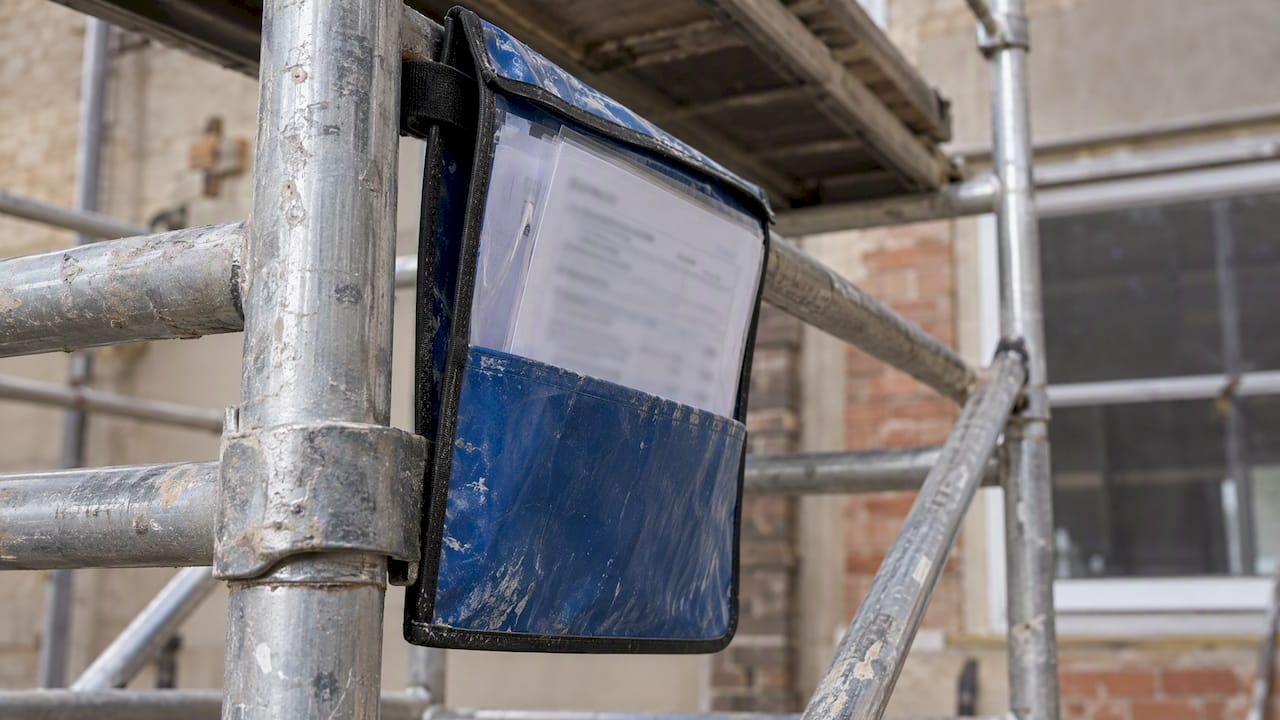
A tag on the tower is useful for showing anyone walking past that it has been checked, but HSE confirms a tag does not replace the written report that regulation 12 requires. You still need the full record behind it.
Your Schedule 7 form should capture, at minimum: location, date and time, inspector’s name, defects found, and action taken. Several practical formats work on site:
- Pocket inspection books: quick to fill in, cheap, but easy to lose or damage outdoors.
- Site logbooks: centralised and harder to misplace, though less convenient for lone workers moving between towers.
- Digital or mobile forms: fast to complete and simple to share, provided the office keeps backups.
Pro Tip: Photograph each completed paper form before it leaves your pocket, so you have a backup if the original gets lost or damaged on site.
Whichever method you use, supply the written report to the responsible person within 24 hours and keep it until the next inspection is carried out.
Daily pre-use checks before anyone climbs the tower
Before climbing a mobile tower each day, or after moving one to a new position, run through a short set of checks that take only a couple of minutes but catch most of the problems that develop between statutory inspections.
- Check the ground is level and firm, with all castors in full contact and brakes applied.
- Look up and around for overhead obstructions, power lines or doorways along the planned route.
- Fit stabilisers or outriggers where the tower height requires them.
- Check current wind conditions, bearing in mind that gusts can funnel unpredictably around buildings and corners on site.
- After any move, re-level the tower, lock the castor brakes again, confirm stabiliser contact and repeat the pre-use check before anyone climbs.
A pre-use check is not the same as the statutory seven-day inspection, but PASMA guidance treats it as mandatory after every move, since shifting a tower across uneven ground can loosen fixings that passed inspection the day before.
Common defects and what to do when you find one
Certain faults turn up again and again on hired and owned towers alike: damaged or sticking castor wheels, missing locking clips, warped or split decks, cracked spigots and braces that have worked loose over repeated use.
Spot any of these and the response is the same regardless of how minor it looks:
- Stop using the tower immediately and prevent anyone else climbing it.
- Apply a clear “do not use” tag so the fault is visible to the next person on site.
- Record the defect in the written inspection report, including what you found and where.
- Arrange a competent repair or replacement before the tower goes back into service.
Strong winds, significant impact damage or any structural alteration call for the same response: stop, tag, and get a fresh inspection from a competent person before anyone climbs again. Do not wait for the next scheduled seven-day check.
Getting towers that are easier to inspect from day one
A thorough inspection depends on the tower being complete and correctly specified for the job in the first place. We specialise in aluminium scaffold tower hire with a wide range of tower sizes and types to match the work, from painting jobs to full construction projects.
- Every tower we supply meets UK safety standards, with guardrails and non-slip platforms fitted as standard.
- We offer hire with no deposit required, and provide next-day delivery across our service area.
- Booking is handled online, backed by personalised support if you need help choosing the right tower for the job.
Supplying a full component set and the manufacturer’s instructions with every tower means your competent person is checking a complete structure, not hunting for a missing clip or a mislaid manual. That makes the seven-day inspection quicker and the pre-use check more reliable.
What actually makes inspections stick on a busy site
Checklists only work if someone actually runs them, and the sites that manage this well tend to do a few unglamorous things consistently. They tie the inspection into something that already happens weekly, like a site check-in or shift handover, rather than treating it as a separate task that competes for attention.
They also keep the circle small: two or three trained inspectors using one shared form beats a dozen people each filling in their own version differently. And they lean on their hire supplier to deliver complete towers with manuals attached, because a missing brace found on site costs more time than a five-minute phone call would have.
— Dervish
Scaffold Tower Rental: towers that arrive ready to inspect
We assist by delivering complete, correctly specified towers with instructions included, so your competent person has everything needed to sign off the structure on day one.
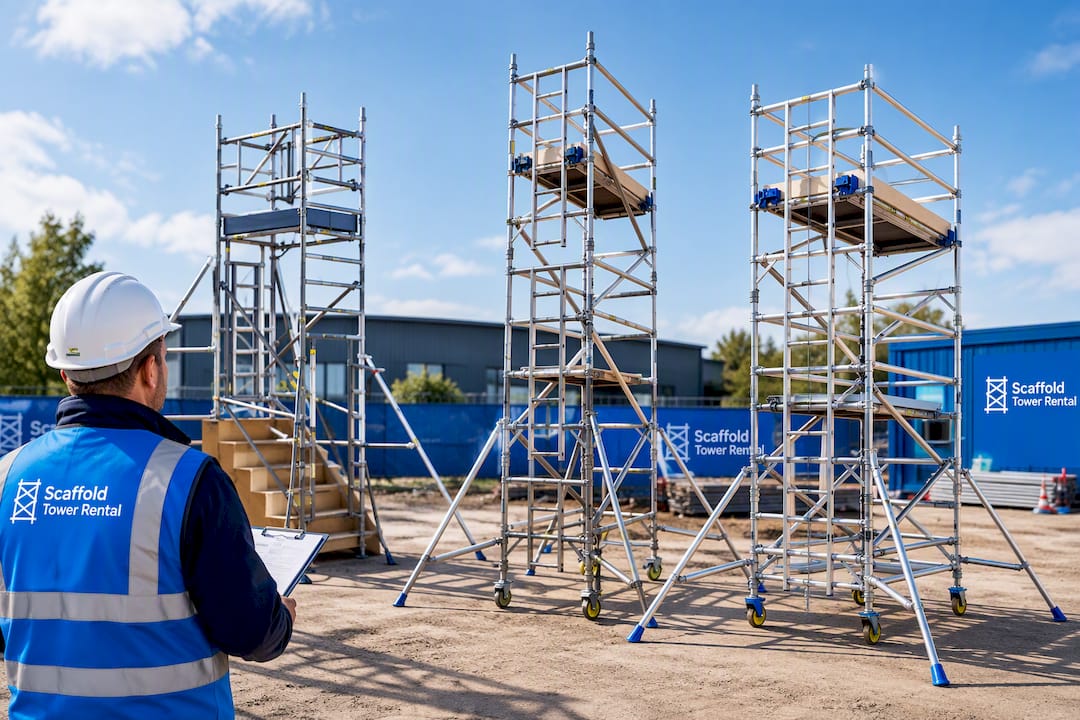
- Our Stairwell Towers-Scaffold-tower-hire suit staircases and confined access points where a standard frame won’t fit.
- Our 3T Industrial Scaffold Tower Hire covers heavier industrial and construction use.
- Our Industrial Scaffold Tower Hire range extends further for larger commercial projects.
Next-day delivery is offered, and every tower comes with its manual so your written inspection report lines up with the correct component list from the start. Browse the full scaffold tower hire range or check our shop for current availability and get your tower booked in.
FAQ
How often must a scaffold tower be inspected by law?
Towers from which a person could fall 2 metres or more must be inspected after assembly and at intervals not exceeding seven days, under the Work at Height Regulations. You also need an inspection immediately after adverse weather, impact or any structural alteration, regardless of the seven-day schedule.
Who counts as a competent person for scaffold tower inspections?
A competent person is someone with enough training and practical experience to recognise defects and judge whether a tower is safe to use, typically through PASMA or CISRS training or equivalent experience. There is no single mandatory qualification, but the inspector must genuinely understand the tower’s construction and failure points.
Does a scaffold tag replace the written inspection report?
No. A tag is useful for showing current status at a glance, but it does not satisfy the legal requirement for a written report under regulation 12. You still need the full Schedule 7 record behind it.
What should a scaffold tower inspection checklist include?
A thorough checklist covers castors and brakes, adjustable legs, frames and spigots, platform decks and fixings, guardrails and toe boards, braces and stabilisers, access points, and manufacturer labels. Each item should be checked for damage, correct fitting and secure locking before the tower goes into use.
What should I do if I find a fault during an inspection?
Stop using the tower immediately, apply a clear “do not use” tag, and record the defect in the written inspection report. Arrange a competent repair or replacement before anyone climbs the tower again.