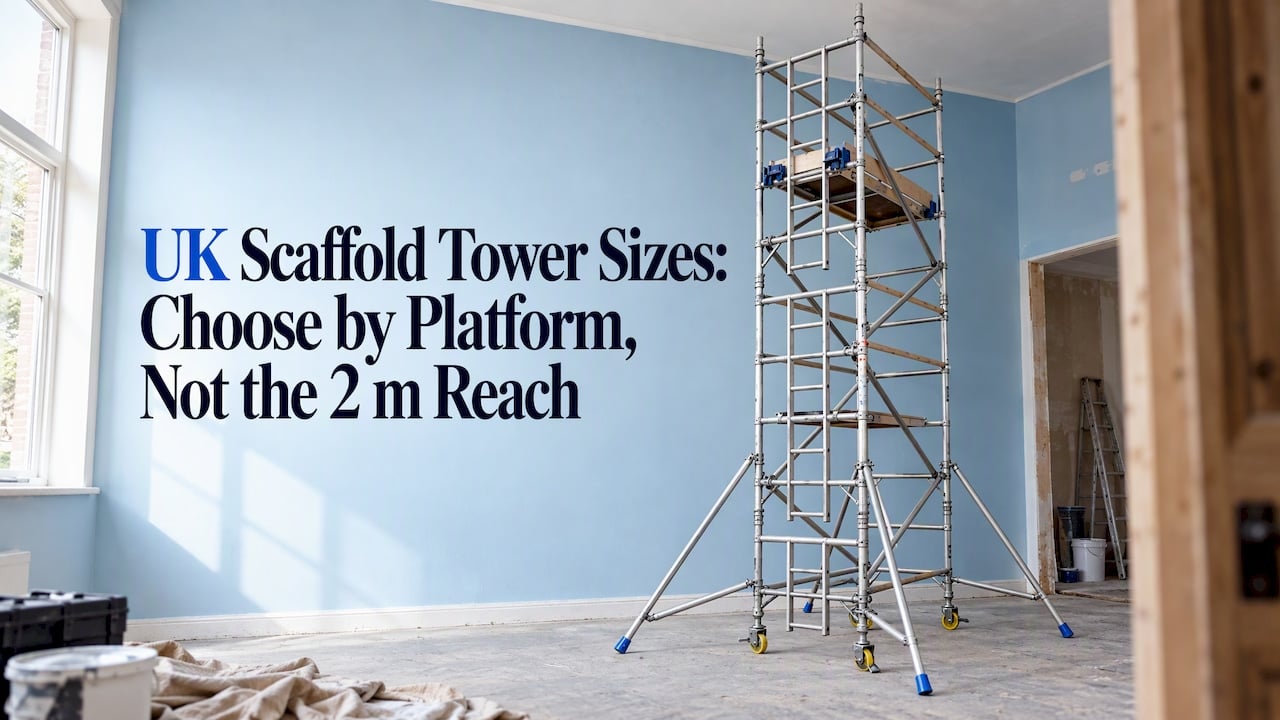
The correct tower size comes down to one number: platform height, the deck where you actually stand, not the advertised working height. Working height is typically estimated as platform height plus around two metres of reach, so measure where your feet need to be, then match that to a platform height band. Everything else, including width, load and stability, follows from that single decision.
TL;DR:
- Estimate the required platform height by subtracting roughly 2 metres from the task’s reach height; working height adds about 2 metres to the platform.
- Mobile access towers typically reach 8 metres outdoors and 12 metres indoors when the manufacturer permits it; wind lowers the safe outdoor limit.
- Measure the narrowest doorway and staircase before booking; a stairwell tower fits steps, while a double width model may not pass through tight access.
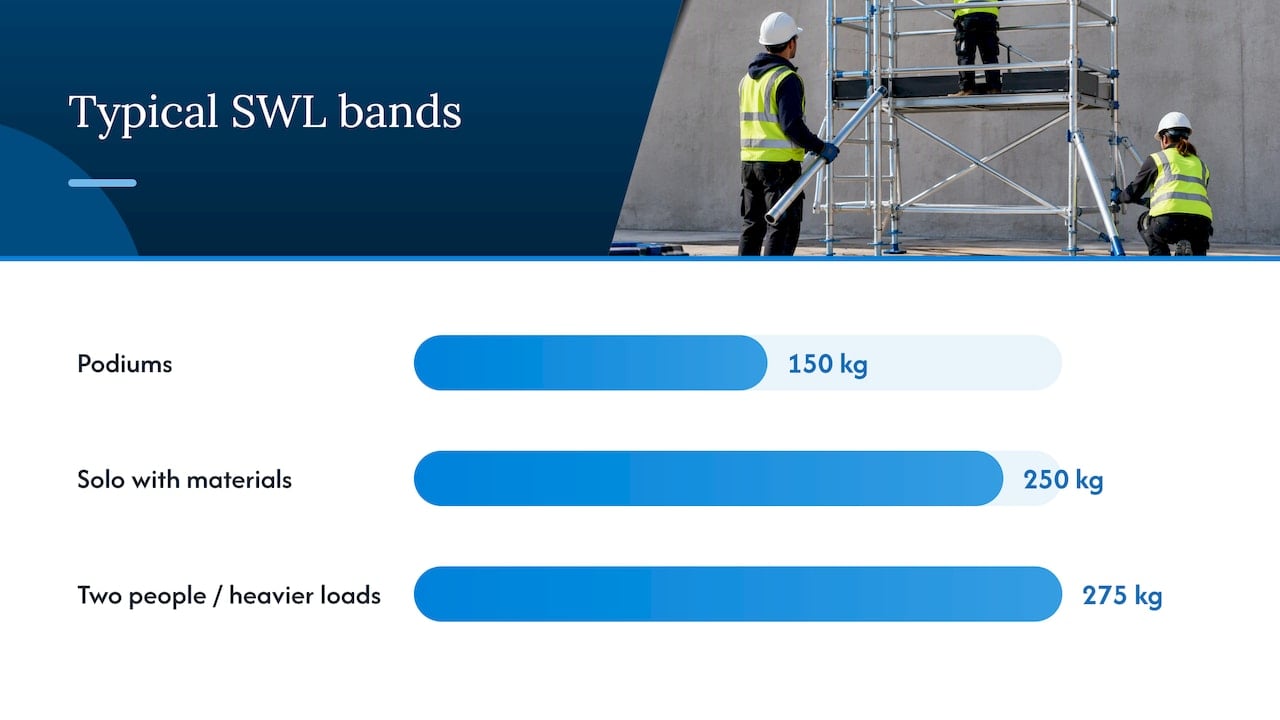
- Typical safe working loads are 150 kg for podiums, 250 kg for solo work with materials, and 275 kg for two people or heavier loads.
- Stabiliser size and placement depend on the tower model and height, so follow its manual instead of applying a universal base to height ratio.
Table of Contents
- Platform height versus working height at a glance
- Which tower type suits your access situation?
- Three questions to find your exact tower size
- Why stabilisers, SWL and the manual matter more than guesswork
- Matching tower sizes to what we have in stock
- A hire specialist’s take on getting the size right
- How to hire the right size from us
- FAQ
- Sources
Platform height versus working height at a glance
Platform height is the physical deck you stand on. Working height is what most adverts quote, and it assumes an average person reaching upward, which is why the two numbers rarely match. A widely used rule of thumb in industry guidance adds roughly 2 metres of reach to the platform height to estimate working height, so a 4.0 metre platform gives a working height close to 6.0 metres.
The chart below maps common platform heights to approximate working heights and typical jobs, so you can narrow your search before you even look at a specific tower model.
Single-width platforms suit solo decorating and inspection work, while double-width platforms give you room for a second person or a stack of materials. When a job involves carrying tiles, render or multiple tools up the tower, choosing one platform band wider than the minimum often saves repeated trips and reduces the temptation to overreach.
Which tower type suits your access situation?
Tower construction matters as much as height once you factor in doorways, stairs and whether you are working alone or with a team.
- Podiums and pulpits suit single-operator, low-level jobs indoors where a quick, stable platform beats a full tower.
- Mobile access towers built to EN 1004-1 cover most general-purpose jobs and move on locking castors between tasks.
- Ladder-frame towers are the standard freestanding option for outdoor render, guttering and roofline work.
- Stairwell towers are purpose-built with stepped frames that sit directly on a staircase, which a standard tower cannot do safely.
- Double-width towers give two people room to work side by side or to store materials on the platform.
PASMA guidance on mobile access towers notes typical freestanding working heights of up to 8 metres outdoors and 12 metres indoors, where the manufacturer’s manual permits it. That gap between indoor and outdoor limits exists because wind loading outdoors reduces how high a freestanding tower can safely go, so an outdoor job that looks borderline on paper may need a lower platform than the same job indoors.
For stair access specifically, a stairwell tower with its stepped base frame is often the only configuration that sits safely on the treads.
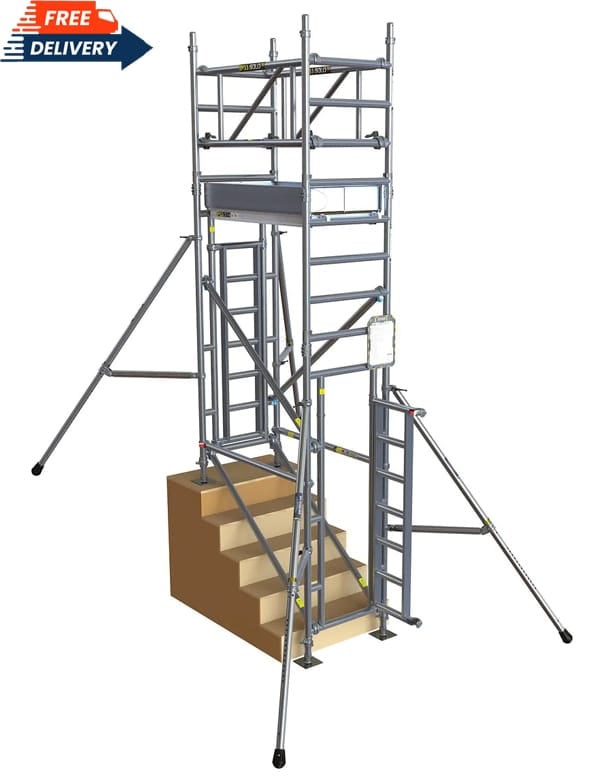
Pro Tip: Measure your narrowest doorway and staircase width before booking, since a double-width tower that cannot pass through your access point is the most common reason for a failed delivery day.
Three questions to find your exact tower size
Answering three questions in order takes most of the guesswork out of choosing a size.
- Where do you need to stand? Measure the height of the task itself, then subtract roughly 2.0 metres to find the platform height you actually need, rather than working backwards from an advertised working height.
- Who and what will be on the platform? A solo decorator with hand tools needs a lower safe working load than two people carrying render boards, so check the model’s SWL rating against your heaviest realistic load.
- Where will the tower stand? Indoor, outdoor, on a slope, near a doorway or on a staircase all change which tower type and stabiliser configuration you need.
Once you have answers to all three, check the instruction manual for the specific model you are considering, since stabiliser spacing and maximum platform height vary between manufacturers even at the same advertised size. Our hire checklist walks through these same questions if you want a printable version before you book.
Why stabilisers, SWL and the manual matter more than guesswork
There is no universal base-to-height ratio that works across every tower, whatever rule of thumb you may have heard. PASMA’s operator code of practice specifies stabiliser or outrigger size and placement for each individual tower height, and that schedule comes from the manufacturer’s manual, not a generic formula.
- Stabilisers often need repositioning or a larger footprint as you add platform height, so recheck the manual at every stage of the build.
- Safe working load bands commonly sit around 150 kg for podiums, 250 kg for solo work with materials, and 275 kg where two people or heavier loads are involved.
- Moving a tower on its castors generally means reducing platform height to 4.0 metres with stabilisers fitted, or 2.0 metres without them, and locking the castors before anyone climbs.
A tower restrained against a supporting structure needs that structure to be at least two-thirds of the tower’s height to count as suitable restraint without additional tying, according to PASMA’s operator guidance. Under the Work at Height Regulations 2005, towers must be assembled to a recognised standard configuration, footed, braced and fitted with guardrails wherever a fall could cause injury, which rules out improvised stacking or skipped components.
The standards worth keeping to hand are EN 1004 for mobile access towers, BS 1139-6, BS 8620 for podiums and low-level platforms, PASMA’s operator guidance, and the HSE’s own Work at Height Regulations summary. Our access accessories page covers the stabilisers, outriggers and toe boards that pair with each tower size.
Matching tower sizes to what we have in stock
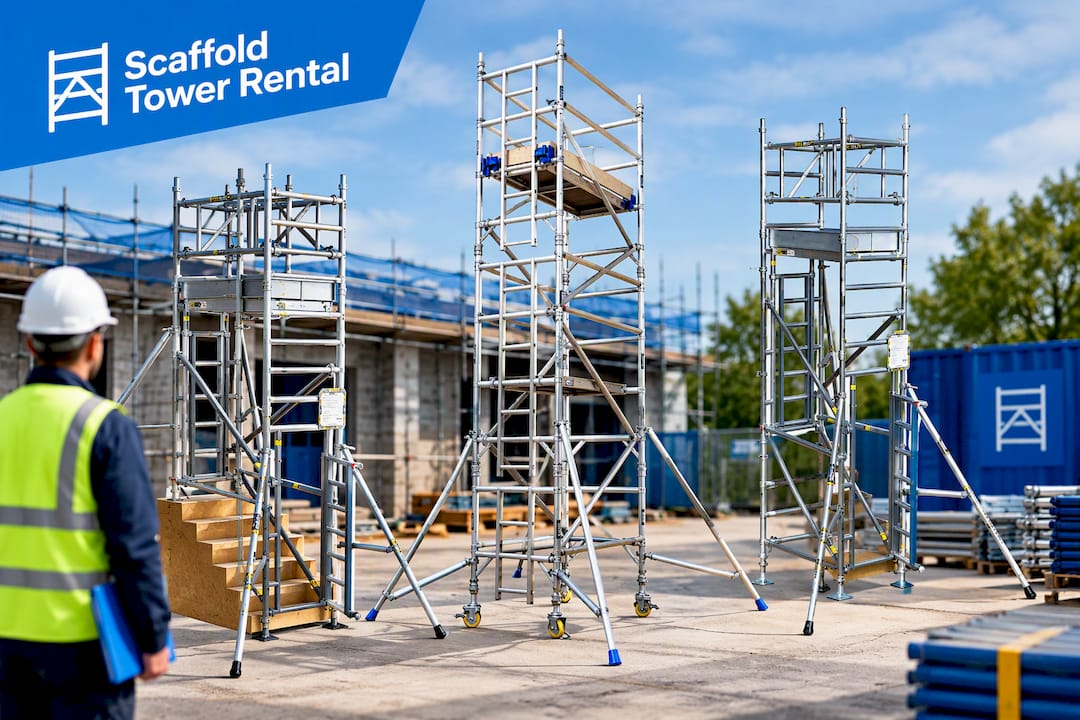
We stock over 250 tower sizes and configurations, so most of the platform heights in the chart above have a direct match in our range. Our 3T Industrial Scaffold Tower Hire line covers the mid-height bands suited to render and roofline work, our Stairwell Towers handle staircases that a standard frame cannot sit on, and our Industrial Scaffold Tower Hire range extends into the taller, two-person platforms for commercial elevations. Every tower we hire out meets UK safety standards, with guardrails and non-slip platforms fitted as standard.
A hire specialist’s take on getting the size right
Most sizing mistakes come from fixating on the advertised working height and ignoring the platform you will actually stand on. Measure the platform height first, confirm the safe working load against your heaviest load, and check the stabiliser schedule in the manual before you build.
— Dervish
How to hire the right size from us
Once you know your platform height band, booking is the easy part. We offer next-day delivery as standard, no-deposit hire so you are not tying up cash before the job starts, and personalised support if you are unsure between two sizes.
- Free next-day delivery across our London coverage area.
- No-deposit hire on every tower in our range.
- Over 250 sizes and configurations, from podiums to stairwell towers.
- Every tower fitted with guardrails and non-slip platforms as standard.
Browse the full scaffold tower hire range to match your platform height to a specific model, or go straight to our shop to compare sizes side by side and book online in a few minutes.
FAQ
What size scaffold tower do I need?
Measure the platform height you need to stand at for the task, then subtract roughly 2.0 metres from the height you need to reach to find that figure. Most jobs fall into bands from around 0.75 metres for ceiling work up to 6.0 metres or more for two-storey render and roofline access.
What is the 3 to 1 rule for scaffolding height?
There is no single universal base-to-height ratio you can apply to every tower. Stabiliser and outrigger sizing is set out model by model in the manufacturer’s manual and PASMA’s operator guidance, so always check the specific schedule for your tower rather than relying on a fixed rule.
What are the standard sizes of scaffolding?
Common platform heights range from around 0.75 metres on a podium up to 8.0 metres or more on an industrial mobile tower, with working heights roughly 2.0 metres higher at each step. Our range covers over 250 of these size and configuration combinations across podiums, mobile towers and stairwell models.
What is the working height of a 6m scaffold tower?
A tower with a 6.0 metre platform height gives a working height of around 8.0 metres, based on the standard platform-plus-reach estimate used across the industry. Always confirm the exact figure against the specific model’s spec sheet, since reach allowances can vary slightly between manufacturers.
Sources
For the regulatory detail behind safe tower use, the HSE’s scaffolding and work at height guidance covers the Work at Height Regulations 2005 in full, while PASMA’s ultimate guide sets out tower categories and freestanding height limits.
- HSE scaffolding and work at height guidance
- PASMA ultimate guide to towers and low-level access
- Which scaffold tower do I need? | Construction News