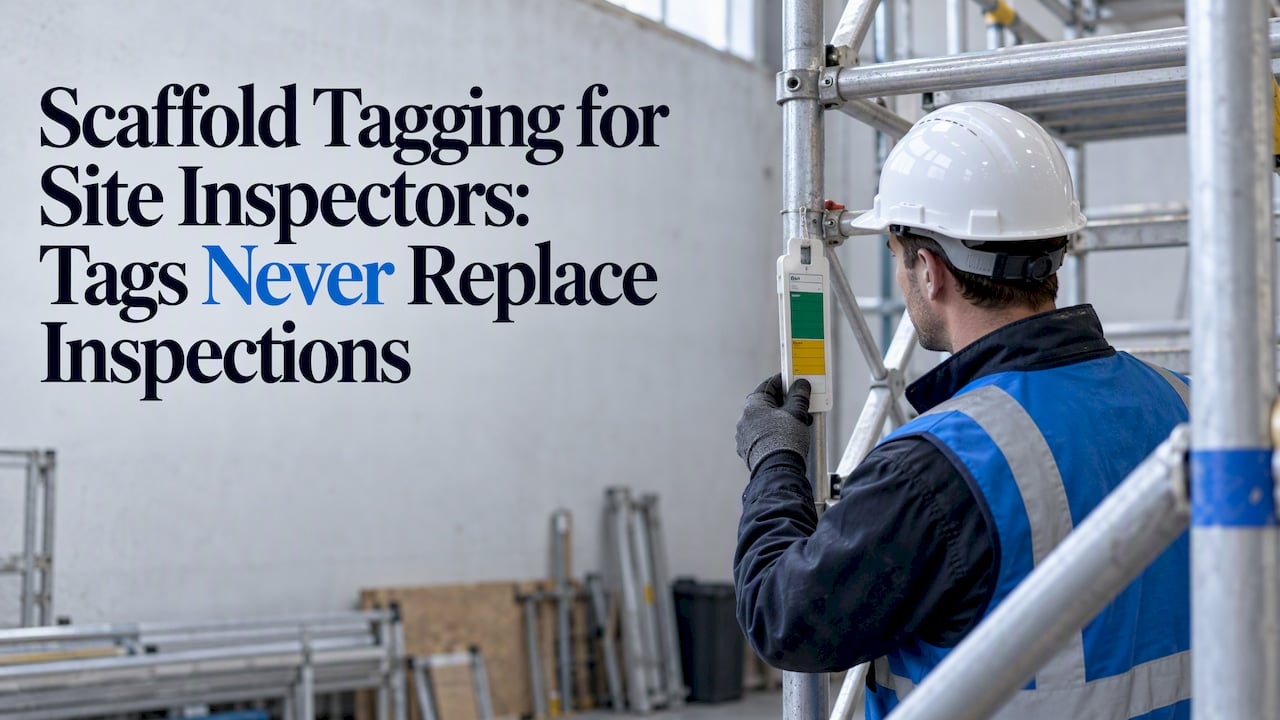
A scaffold tagging system is a visible marker, usually a colour-coded card or insert, that shows at a glance whether a scaffold or tower is safe to use. It supplements, but never replaces, the statutory inspection reports required under the Work at Height Regulations. Check your scaffold register now and confirm who holds responsibility for both the tag and the written record behind it.
TL;DR:
- A competent person must inspect scaffolds with a fall risk of two metres or more on completion, every seven days, and after events affecting stability.
- Green means safe, amber or yellow means restricted access, and red prohibits use; tower inserts should also record each relocation and the safe working load.
- A physical tag suits a single tower on a short job, while contractors managing towers across sites can pair tags with a digital log.
- Site teams should record inspection date, inspector initials, and next due date on the tag and register, then check tags before each shift and handover.
Table of Contents
- Why tagging systems matter for site safety and operations
- Common tag types and what the colours mean
- Legal and compliance essentials: inspections, competent person and the 7-day rule
- Physical vs digital tagging: pros, cons and when to use each
- Practical implementation checklist: how to adopt or update a tagging system on site
- Our experience fitting tags to hired towers
- Making tags work in day-to-day inspections
- Hire a compliant tower and simplify your tagging routine
- FAQ
- Sources
Why tagging systems matter for site safety and operations
A tag at the access point gives anyone approaching a scaffold an immediate answer: is this safe to climb, or not. That matters most at busy sites where several trades share the same structure across a working day.
Tags earn their place in three ways:
- They give operatives a visible, instant status check before they put a foot on the first lift.
- They smooth handovers between crews and shifts, so nobody has to track down the site manager to ask whether a tower was signed off that morning.
- They flag problems fast: a damaged guardrail or an overdue inspection shows up on the tag before anyone starts work.
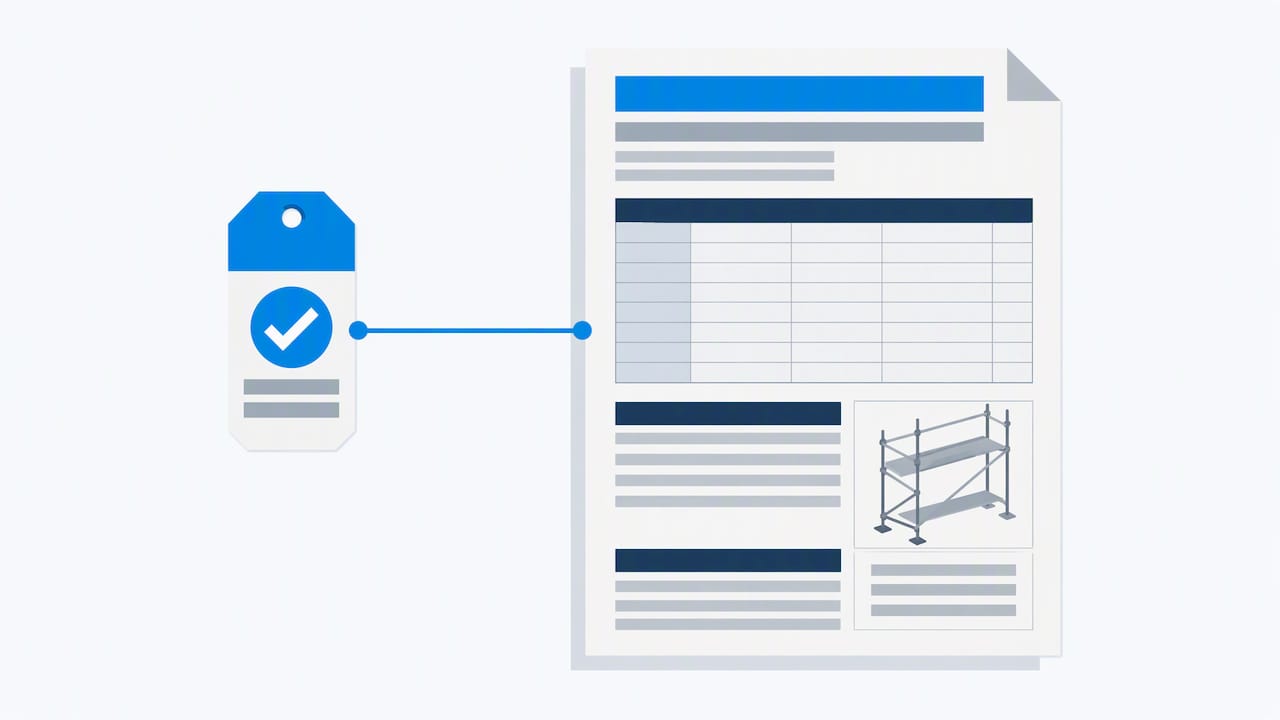
What tags cannot do is stand in for the paperwork. A card hanging on a frame is not a substitute for the retained inspection report that the regulations actually require.
Pro Tip: Treat the tag as the headline and the inspection report as the full story: never let one exist without the other.
Common tag types and what the colours mean
Most visual tag systems, including the widely used Scafftag format, follow a simple colour logic that any site worker can learn in minutes.
- Green tag: the scaffold has passed inspection and is safe to use; it typically carries the inspection date, the inspector’s initials and the date the next check is due.
- Yellow or amber tag: access is restricted, often meaning the structure is only safe for specific trades or under stated conditions.
- Red tag: the scaffold is unsafe and must not be used until a competent person clears it.
Towers carry extra detail beyond the basic colour code. Guidance from the Scafftag scaffold system describes tower-specific inserts, sometimes called tower tags, that log each relocation along with the safe working load, since a tower moved across a site needs re-checking every time it goes up again. Tags belong at the main access point, usually the base of the ladder or stair, where nobody can miss them on the way up.
Legal and compliance essentials: inspections, competent person and the 7-day rule
A tag is good practice, not a legal requirement. The law that actually governs scaffold safety is more specific, and it does not mention tags at all.
Scaffolding from which a person could fall two metres or more must be inspected by a competent person on completion and at intervals not exceeding seven days thereafter, with a visible tag system treated as a useful supplement to the inspection report rather than a replacement for it.
That standard comes directly from HSE guidance on scaffolding, and the Work at Height guidance adds that inspection is also required after any event likely to affect stability. A competent person needs the training, knowledge and experience to judge whether a structure is sound, which for straightforward towers can be a manager with scaffold inspection training, though complex scaffolding warrants a CISRS-accredited inspector.
Physical vs digital tagging: pros, cons and when to use each
Paper and plastic insert tags remain the default on most sites because they are cheap, instantly visible and need no battery or signal. Digital systems built on QR codes, NFC or RFID trade some of that simplicity for a stronger audit trail.
- Physical tags cost little, work in any weather once laminated, and anyone can read them without a phone.
- Digital tags let a manager pull up inspection history remotely and spot overdue towers across several sites at once.
- Physical systems depend entirely on someone manually updating the insert, which is where dates tend to drift.
- Digital systems need training, a charged device and a reliable way to update records on-site, which can slow things down on a small job.
For a single tower on a short domestic job, a physical tag is usually enough. For a contractor running several towers across multiple addresses, a hybrid approach, a physical tag for the on-site glance plus a digital log for the record, tends to work best.
Practical implementation checklist: how to adopt or update a tagging system on site
Getting a tagging system right on site comes down to clear roles and a routine nobody skips.
- Appoint a competent inspector, a separate tag updater if the site is large enough, and a record keeper who holds the scaffold register.
- Place the tag at the main access point, fill in the date, inspector initials and next due date every time, and log the same details in the scaffold register.
- Train everyone who touches a tag on what each colour means, keep inspection reports for the length of the project, and remove a scaffold from use immediately if the tag shows a prohibited or overdue state.
Statutory inspections are required at intervals not exceeding seven days, so a simple weekly reminder tied to that interval is the single most effective way to stop a tag date quietly drifting out of compliance.
Our experience fitting tags to hired towers
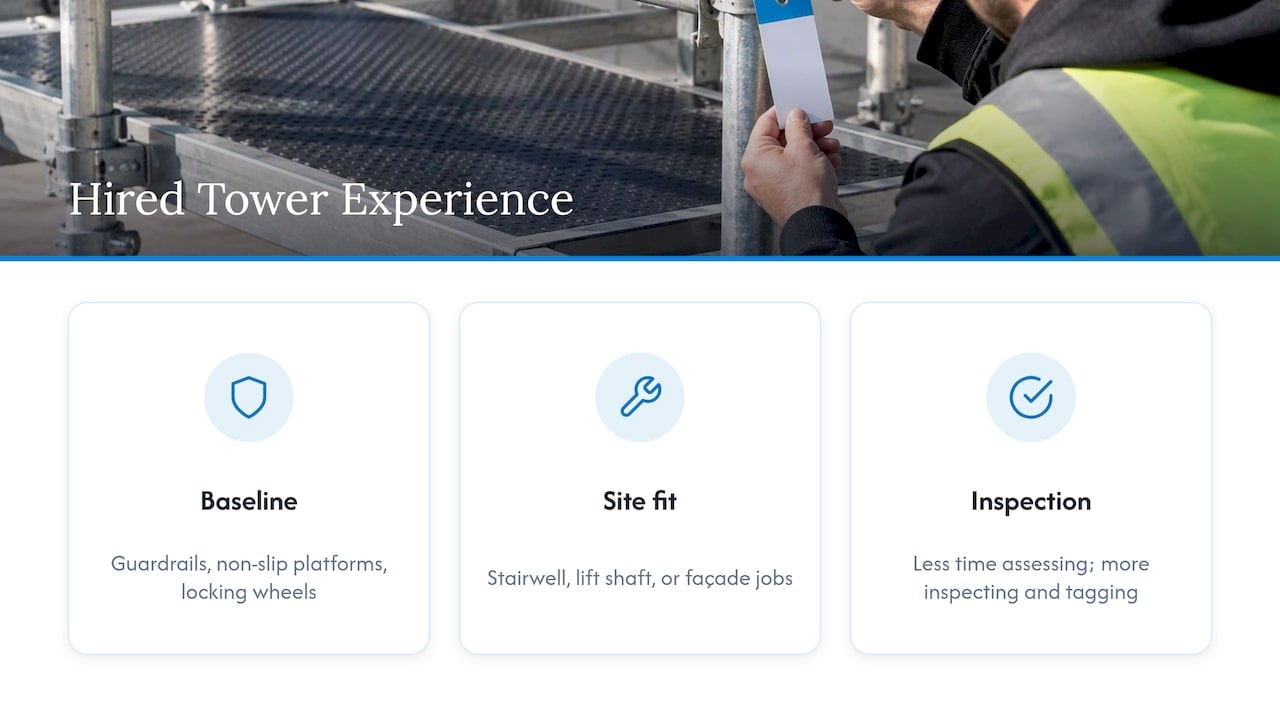
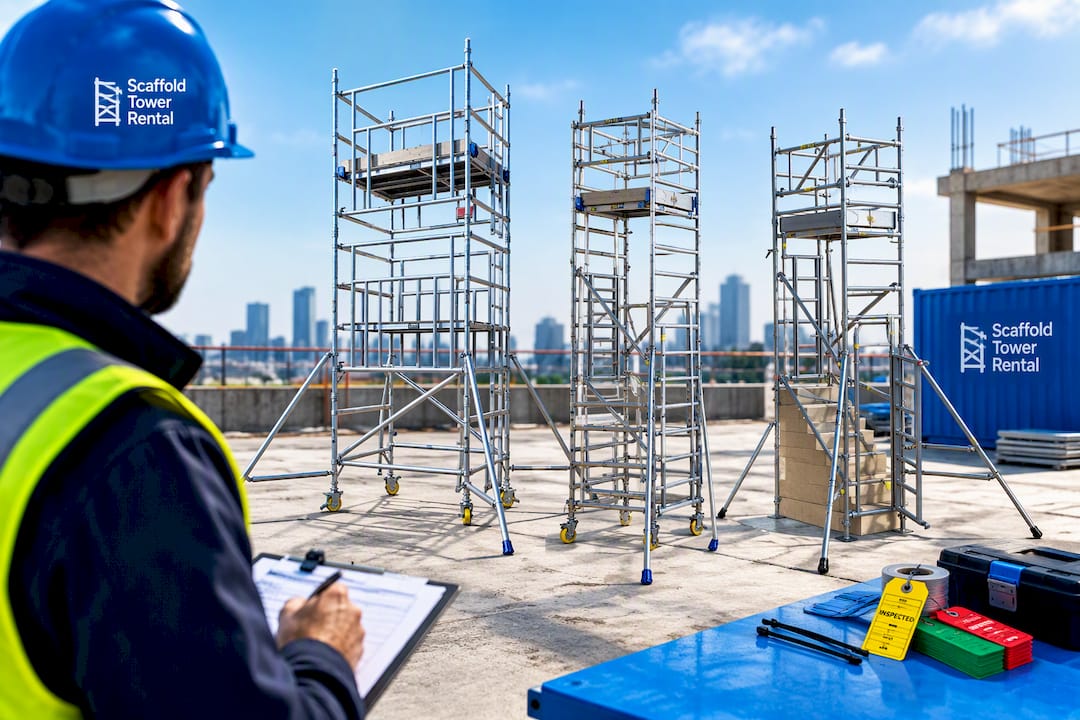
We supply aluminium scaffold towers that already carry guardrails, non-slip platforms and locking wheels, which means an inspector arrives to a tower that meets the baseline before a tag ever goes up. Our portable scaffolding towers and the wider scaffold tower hire range cover many sizes and types, so the right structure for a stairwell, a lift shaft or a straightforward façade job is rarely a compromise. A scaffolding guide sets out how these towers fit into broader site access planning. Less time spent assessing an unfamiliar tower means more time spent on the inspection and the tag that follows it.
Making tags work in day-to-day inspections
The habit that actually sticks is a pre-shift walkaround: five minutes checking every tag before anyone climbs, not just at the start of the week. Fold that same check into every handover, so the outgoing crew states the tag status out loud and the incoming crew confirms it before taking over.
— Dervish
Hire a compliant tower and simplify your tagging routine
Choosing a tower that already meets the standard your tag is supposed to confirm takes half the guesswork out of inspection day. Every tower comes with guardrails, non-slip platforms and a clearly stated safe working load, so your competent person is checking a known structure rather than an unfamiliar one.
| What you get | Detail |
|---|---|
| Delivery | Delivery service available across our London service area |
| Deposit | No deposit required for rental |
| Range | A wide range of tower sizes and types |
| Example plan | AGR Scaffold Tower Hire (Advanced Guardrail), £119.99 to £259.99 per week |
If your next job needs a stairwell tower, an industrial-grade structure or a straightforward trade tower, browse our scaffold tower hire range and book online, with personalised support if you are not sure which size fits your access point.
FAQ
What is a scaffolding tag system?
A scaffolding tag system is a visible card or insert, usually colour-coded, that shows whether a scaffold has passed its most recent inspection. It sits alongside, and never replaces, the written inspection report required by law.
Is a scaffold tag a legal requirement?
No. HSE guidance confirms that tags are not a legal requirement, though the underlying inspection they represent is: scaffolding from which someone could fall two metres or more must be inspected on completion and at intervals not exceeding seven days.
What is the 3 to 1 rule in scaffolding?
The 3 to 1 rule refers to the base-to-height ratio generally used to judge when a freestanding tower needs extra stabilisation, such as outriggers or ties, rather than a tagging requirement. Specific stability limits vary by tower design, so always follow the manufacturer’s guidance for the structure in use.
What are the types of scaffolding tags?
The most common format uses green for passed and safe to use, amber or yellow for restricted access, and red for unsafe. Towers often add a dedicated insert recording relocations and the safe working load, as described in the Scafftag system guidance.
Who can sign off a scaffold inspection tag?
Only a competent person, someone with the training, knowledge and experience to judge the structure, can sign off an inspection. For straightforward towers that may be a trained on-site manager, while more complex scaffolding needs a CISRS-accredited inspector.
Sources
- Working at height: A brief guide - HSE (INDG401)
- A guide to the Scafftag scaffold system - Approved Business (Scafftag brochure)