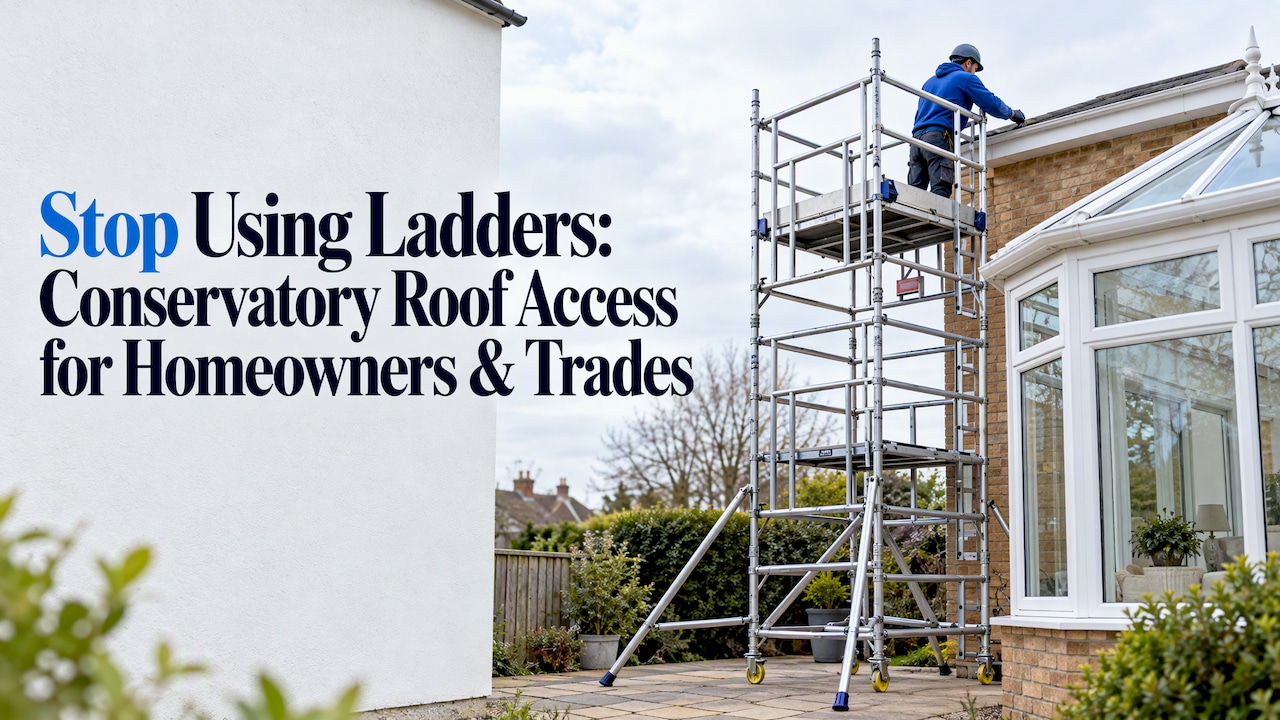
For anything beyond a quick look, hire a guarded scaffold tower or use a purpose-built conservatory access platform. A conservatory ladder with stabilisers and weight-spread feet is acceptable for short, low-risk jobs only. Treat every conservatory roof as fragile until a competent person confirms it can safely take weight.
TL;DR:
- Using a purpose-built access platform or scaffold tower is safer and more practical than a ladder for jobs longer than a few minutes or with higher risk.
- Most domestic conservatory work benefits from hiring equipment for a day or weekend, especially for infrequent maintenance or repairs, rather than buying and storing gear.
- HSE guidance states that even stable roofs are fragile until proven otherwise, and fall prevention measures like guardrails and risk assessments are essential.
- Proper assessment of the task duration, roof condition, and access constraints determines whether a ladder, tower, or MEWP provides the safest and most efficient means of access.
- Always verify that hire equipment comes with inspection certification and method statements before use, and match the equipment to the specific risk and length of the job.
Table of Contents
- Comparing conservatory ladders, access platforms, scaffold towers and MEWPs
- Should you hire a tower or buy a ladder and access kit?
- What HSE guidance says about working on conservatory roofs
- How to choose the right equipment for the job
- How our towers and accessories are built for conservatory work
- Why the safest option is usually the simplest one
- Booking a tower for your conservatory job
- Sources
- FAQ
Comparing conservatory ladders, access platforms, scaffold towers and MEWPs
Each access method suits a different job. A conservatory ladder with stabilising legs and padded, weight-spreading feet works for brief inspections or a five-minute gutter check, but it only spreads load over a small area and gives no fall protection if you slip. It is not designed for sustained work or for carrying tools and materials.
Purpose-built access platforms and boarded stagings do a better job of spreading your weight across the roof structure rather than a single glazing panel, which lowers the risk of cracking polycarbonate or glass sheets. Scaffold towers go further still: a proper platform with guardrails and toe boards gives collective fall protection, a stable working surface, and room to store tools safely while you clean or inspect.
Mobile elevating work platforms (MEWPs) let you inspect or clean from above without ever stepping onto the roof, which suits properties with clear ground access and no overhead obstructions such as trees or power lines.
- Conservatory ladders: fast to set up, cheapest, but limited to short, low-risk tasks.
- Access platforms: spread load well, reduce glazing risk, good for medium-length jobs.
- Scaffold towers: best all-round option for gutter clearing, roof repairs or bird-proofing work that takes more than a few minutes.
- MEWPs: ideal where ground conditions allow but less practical for tight gardens or narrow side passages.
For most one-off domestic jobs, hiring a tower or platform for a day or weekend works out more practical than buying specialist kit that then sits in a shed for a year.
Should you hire a tower or buy a ladder and access kit?
The right choice depends on how often you need access and how risky the job actually is.
- Work out frequency: a once-a-year gutter clean points towards hiring, while quarterly maintenance across several properties might justify buying.
- Check duration: jobs under about fifteen minutes with low fall risk may suit a stabilised ladder; anything longer calls for a platform or tower.
- Assess the roof itself: older or unverified panels should be treated as fragile, which pushes you towards a tower with boarded staging rather than a ladder.
- Think about access constraints: narrow side passages or adjoining structures affect which tower or platform will actually fit.
- Consider who is doing the work: a competent tradesperson may accept slightly different risk trade-offs than a homeowner working alone.
- Weigh cost against storage: weekly tower hire avoids the ongoing cost of owning and maintaining equipment that is rarely used.
Short-term and weekend hire rates suit the vast majority of domestic conservatory jobs, which is why most homeowners hire rather than buy. Buying only makes sense when you are maintaining several properties or working on conservatories regularly, and even then it means budgeting for storage, inspection and upkeep of your own kit, as detailed in this scaffold tower hire checklist.
What HSE guidance says about working on conservatory roofs
HSE guidance on fragile surfaces is blunt about the risk: do not assume a roof will take your weight.
Falls through fragile surfaces account for around 22% of fatal fall-from-height injuries in construction, according to HSE data. That figure covers all fragile roofing, not conservatories specifically, but it is the reason HSE treats any unverified roof as unsafe to stand on.
The sensible order of priority follows HSE’s hierarchy for work at height: avoid working at height at all where possible, use a MEWP or tower scaffold where the job can be done from a stable platform, and only use a ladder for short, low-risk tasks. HSE’s GEIS5 guidance recommends boarded stagings with guardrails wherever access onto a fragile roof cannot be avoided.
Before any work starts, check for:
- A written method statement describing how falls will be prevented.
- A risk assessment specific to the conservatory and its roof condition.
- Evidence that the person doing the work is competent to judge the roof’s condition.
- Edge protection, toe boards and covered skylights where the platform sits near an opening.
Harnesses are only appropriate when there is a proper anchor point and a documented procedure, never as a stand-alone safety measure on a domestic conservatory roof.
How to choose the right equipment for the job
Getting the specification right matters as much as choosing the right category of equipment. Confirm the working height needed, the platform’s footprint against your conservatory’s dimensions, guardrail height, and the load rating of the tower or platform. Stabilisers and soft feet protect the glazing beneath, and stair access or podium steps make it easier to move tools up safely rather than carrying them by hand.
Useful accessories include load-spreading boards, toe boards, tool trays, and tie-off points if anyone will be using a harness. The range of access accessories available alongside tower hire covers most of these needs.
Before booking, ask the supplier:
- Whether delivery and assembly are included, or whether you need to build it yourself.
- Whether the tower comes with a current inspection certificate.
- Whether they can provide a method statement for the job.
- Who carries insurance responsibility during assembly and use.
Pro Tip: Ask to see the guardrail and load-spread specification in writing before the tower arrives, not after it is already on your drive.
Walk away from any supplier who cannot produce a method statement or who will not demonstrate that the equipment has been inspected.
How our towers and accessories are built for conservatory work
Several of our product lines map directly onto the checklist above. Lift Shaft Towers suit tight, enclosed access points near conservatories. Stairwell towers help carry tools and materials up safely where ground space is limited. The AGR Scaffold Tower Hire (Advanced Guardrail) range adds extra edge protection for longer repair or bird-proofing jobs.
Every tower we supply comes with:
- Guardrails and non-slip platforms fitted as standard.
- Free next-day delivery and no-deposit hire across our service area.
- Podium steps, load-spreading plates and stair access available as add-ons through our podium steps and platforms range.
Booking support is available by phone or online to help match tower size to your conservatory’s layout.
Why the safest option is usually the simplest one
The conventional advice around conservatory roofs tends to focus on which ladder to buy, when the real decision is whether a ladder belongs in the job at all. Most of the damage and injury risk comes from treating a quick inspection and a proper repair as the same task, when they call for completely different equipment.
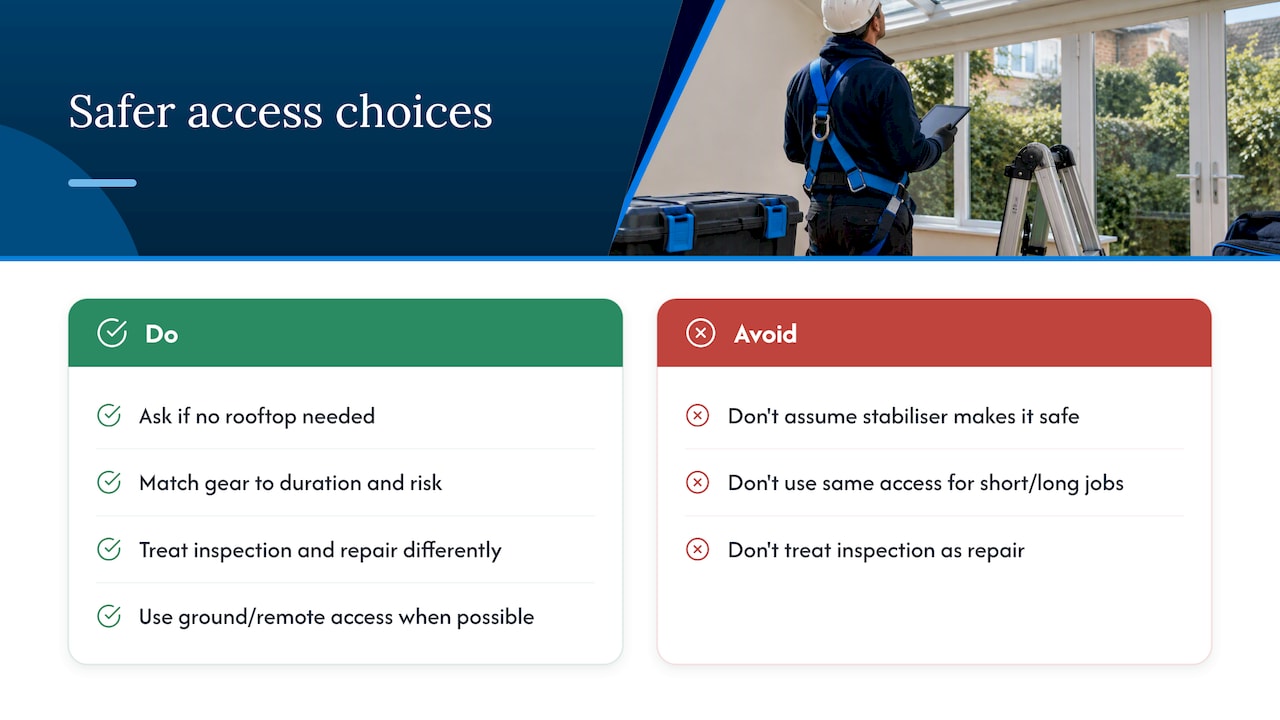
The overrated idea is that a stabilised ladder makes any job safe as long as it has the right feet. It does not. Stabilisers reduce one risk (the ladder slipping) while doing nothing about the roof’s fragility or your ability to work with both hands free. The underrated step is simply asking, before any equipment arrives, whether the job can be done without a person on the roof at all.
If you take one thing from this guide, it is to match the equipment to the actual duration and risk of the task, not to its apparent simplicity. A fifteen-minute gutter check and a half-day repair are not the same job, and they should never use the same access method.
— Dervish
Booking a tower for your conservatory job
Once you know the access method you need, booking a tower is straightforward. 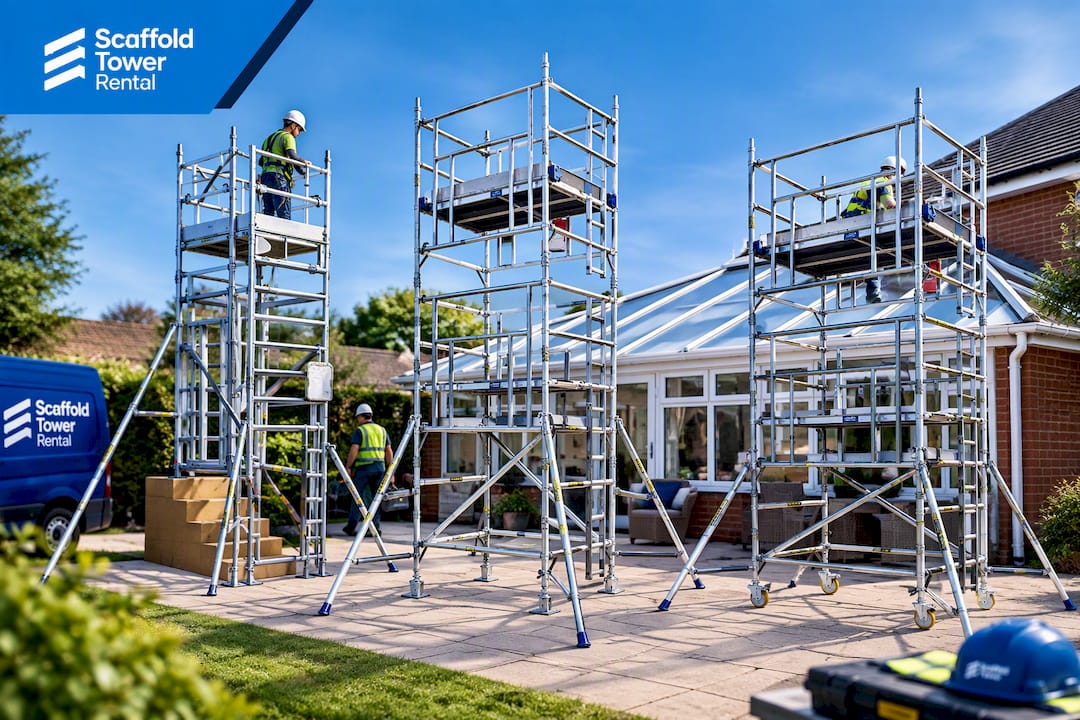
Tell us the working height, any access constraints such as narrow side passages or close proximity to the conservatory glazing, and your preferred hire dates. We can confirm guardrail height, platform size, and whether delivery and assembly are included before you book. Browse the full scaffold tower hire range or check availability for your dates through our hire page today.
FAQ
What is the 4-year conservatory rule and how does it work?
This relates to planning enforcement timeframes for unauthorised building work rather than roof access safety, so it falls outside HSE’s work-at-height guidance. For planning-specific questions about an existing conservatory, check with your local planning authority rather than relying on general online summaries.
Can I walk on my conservatory roof?
Not without a competent assessment confirming it can safely bear weight. HSE guidance treats roofing materials like polycarbonate and glazed panels as fragile until proven otherwise, which is why platforms, towers or MEWPs are the safer route for anything beyond a brief check.
How do I access a roof without a ladder?
A scaffold tower, boarded access platform or MEWP lets you reach a conservatory roof without stepping onto the glazing or using a ladder at all. Towers such as our AGR Scaffold Tower Hire come with guardrails fitted, which gives you a stable platform to work from rather than balancing on rungs.
Do you have to have a door between conservatory and house?
This is a building regulations question rather than a roof access one, and requirements depend on whether thermal separation between the conservatory and the main house is maintained. The Planning Portal sets out the conditions under which conservatories remain exempt from Building Regulations, so check current guidance for your specific structure before relying on general advice.